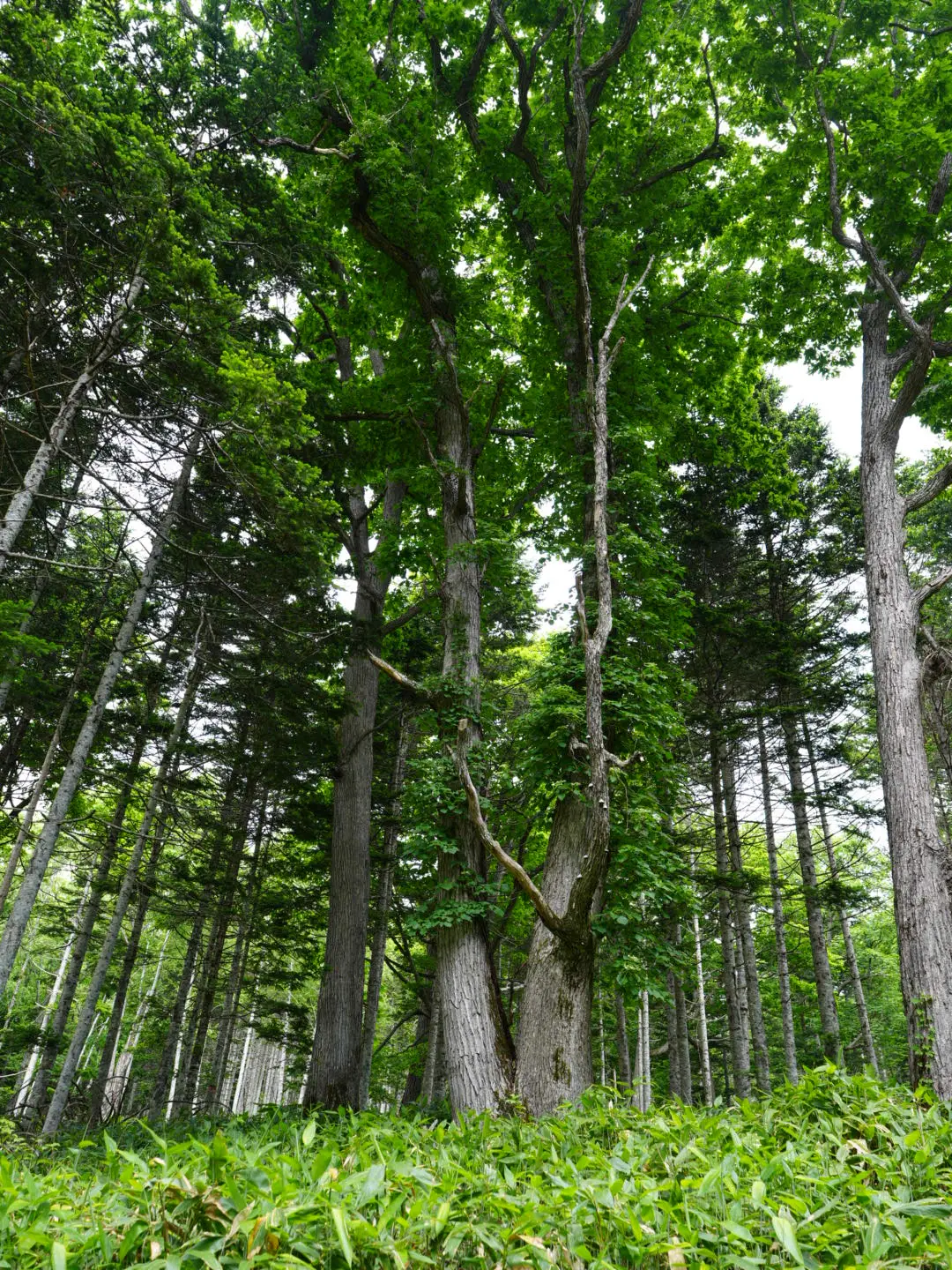
Dohoku is a region with a high density of northern mammals such as Ezo sika deer, brown bears, red foxes, and Ezo flying squirrels. Camera traps (motion-sensor cameras) can be deployed for as little as 20,000 yen per unit, and deep learning that automatically identifies species from millions of images has become practical. This article organizes the lineage of ML for ecology and the feasibility of implementation in Dohoku.
The forests of Dohoku are home to a high density of northern mammals and birds, including Ezo sika deer, brown bears, red foxes, Ezo flying squirrels, and Ural owls. A means of continuously observing them that has spread rapidly in recent years is the camera trap (an automatic camera equipped with a motion sensor). A single unit can be deployed for as little as 20,000 yen, and a single season can yield thousands to tens of thousands of images. However, there is a limit to how many images a person can classify one by one. This is where AI enters the field.
1. The Spread of Camera Traps and the “Image Explosion” Problem
Thanks to their ease of installation and low cost, camera traps are being adopted by researchers, local governments, and the private sector across the country. Yet it is not unusual for 5,000 to 50,000 images to accumulate at a single site over six months. If a person classifies these by hand, even at just five seconds per image, 5,000 images take about seven hours and 50,000 images take 70 hours. The longer observation continues, the more the processing breaks down.
In response to this “image explosion” problem, deep learning has become a practical solution since the latter half of the 2010s.
2. Research on Automatically Detecting Wildlife with Deep Learning
This paper applies object detection deep learning to camera trap images and validates a method for automatically classifying animal species. It is one of the benchmarks widely cited in academia, and it statistically supports the conclusion that “it is possible to achieve accuracy on par with human labor.”
However, benchmark accuracy and field accuracy diverge. In environments with complex lighting and background conditions, such as Dohoku with its dappled sunlight, snow, and bamboo grass thickets, using an off-the-shelf model as-is leads to missed detections and misclassifications.
3. The Challenges of Bringing Machine Learning into Conservation
This survey paper broadly organizes the issues involved in applying machine learning to wildlife conservation. It points out that even when a model becomes technically accurate enough, three walls remain: (1) bias in the training data, (2) collaboration with field workers, and (3) connecting the results to decision-making.
When implementing this in Dohoku, “connecting the results to decision-making” is especially important. Knowing only “how many animals the camera trap captured” leads neither to brown bear countermeasures nor to Ezo sika deer management. The figures need a circuit that connects them to concrete decisions such as closing forest roads, where to install electric fences, and how to manage the safety of tourist routes.
4. Implementation Steps for Dohoku (Provisional)
If nbyn were to implement camera trap + AI monitoring in Dohoku, the following steps would be realistic.
| Phase | Period | Content |
|---|---|---|
| 0 | 1–3 months | Install camera traps at 3 pilot sites and perform manual labeling for species identification |
| 1 | 3–6 months | Apply an off-the-shelf deep learning model (MegaDetector, etc.) to Dohoku data and evaluate accuracy |
| 2 | 6–12 months | Additional training on species specific to Dohoku (Ezo flying squirrel, Ezo least weasel, etc.) and expansion to an in-house model |
| 3 | 12 months onward | Build a decision-making interface with local governments, the Forestry Agency, and tourism operators |
Harder than the technology is the decision-making connection in Step 3. This is where nbyn’s value as an intermediate layer emerges.
5. Ethical and Operational Issues
Wildlife camera traps raise the following issues.
- Handling the incidental capture of individuals (hikers, tourists) — a design that anonymizes them through image processing is needed
- The scope of data disclosure — the iron rule is not to publish the coordinates of rare species’ habitats
- Prior consent for installation sites from landowners, the Forestry Agency, and local governments
- Response processes for dead camera batteries, malfunctions, and theft
These are operational rather than technical problems, and they are an area where an entity like nbyn, which has relationships with Dohoku’s local communities, can make more progress than a standalone research institution.
Conclusion
The combination of camera traps and deep learning has the potential to effectively reduce the cost of observing Dohoku’s wildlife to less than one-tenth. However, there is still a distance between “being able to classify images” and “changing conservation and management decisions.” Bridging this distance within the local context is the work of nbyn as an intermediate layer.